

I was in a breakout session recently where the room filled faster than anyone expected. Extra chairs were pulled in. People stood at the back. These were senior leaders from well-run organisations — and they wanted to be there.
Someone asked who had tried AI in their work. Almost every hand went up. When they asked who was getting real value from it, most hands came down.
Almost none of them knew what to do next.
It is not one gap. It is many. Some tried it a year ago, got inconsistent results, and quietly put it down — concluding the tool wasn’t ready, rather than that they hadn’t been shown how. Some use it every day and have no idea they’re barely scratching the surface. Some have built something into their workflows and get results too variable to trust, without knowing whether the problem is the model, the instructions, or something else. And some have never started — not out of resistance, but because nobody told them this wasn’t a technology tool. It’s a work tool. It belongs to everyone.
Right now, somewhere in your organisation, someone is using AI to research a topic or summarise a document. That’s the right instinct. But they may have reached for whichever tool felt familiar, without knowing that different models have different strengths — and that some will confidently invent sources that don’t exist. The output looks authoritative. Nobody checks it. That’s not a cautionary tale. That’s Tuesday.
That gap is not primarily a strategy problem. It is not primarily a budget problem. At its root, it is a people problem — grassroots, every role, every level. Deloitte’s 2026 survey of over 3,000 senior leaders found insufficient worker skills ranked as the single biggest barrier to AI integration, above legacy systems, above governance, above budget. And it has been easy to miss because this space moves faster than any reasonable person can track. Keeping up feels like a full-time job on top of the actual job — so most organisations have quietly put it off, meaning to come back to it, while the distance grows.
I watched what that distance looks like in a room. Angelo Robles — a leading voice on AI adoption in private wealth and author of multiple books on the subject — had just finished presenting. He had walked them through it: specific steps, named in order. In the Q&A, someone asked for something concrete they could use right now. ‘I just gave you five concrete steps,’ Angelo said. To which the room responded: ‘Can you just give us a prompt that works?’ The best advice people offered each other afterward: use a prompt optimiser.
This was not an unprepared room. These were serious people, paying close attention, trying hard. The information was there. The foundation to receive it wasn’t.
That foundation can be built.
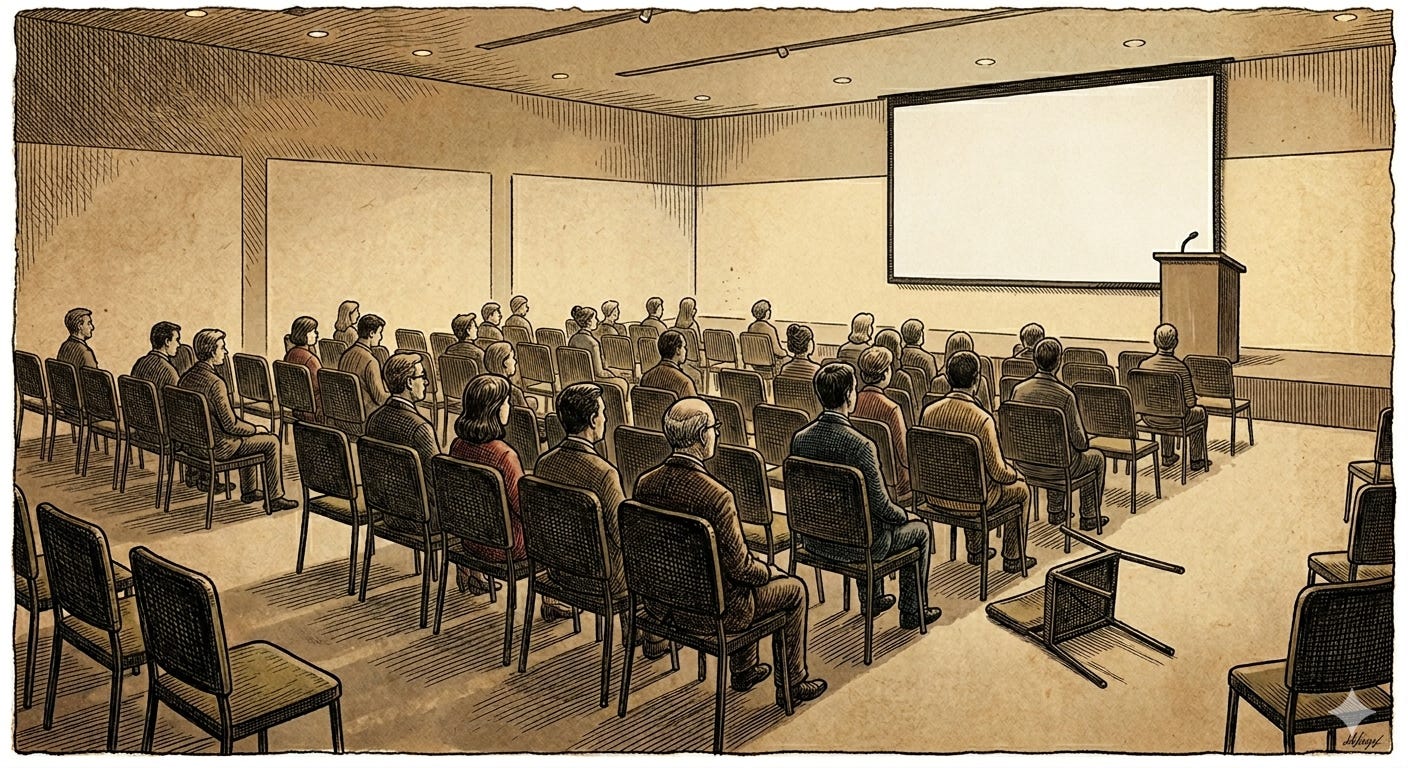

Does anyone in this room know whether your people — not your systems — have actually been shown how to use AI?
Sources: McKinsey State of AI 2025; Deloitte State of AI in the Enterprise 2026
The Bosch Brothers is written by Bala and Krishna Bosch at Keryx Solutions, where they work on AI integration, software architecture, and product delivery. More at keryxsolutions.com